LOG
-
TORONTO — 43.6532° N / 79.3832° W
03.09.2026 — 11:11AM
I just landed in Toronto this week.
It took a little longer than expected. A two-day delay in Spain gave me an unexpected extension to the journey. The realities of travelling.
For some, that might be frustrating. For me, it’s an opportunity to let go of the plan.
You make a plan. Life makes another.
Learning to let go of control has become one of the more interesting parts of travelling—and, perhaps, of life itself.
Right now, I’m lying under the sun, getting some rays. One of my favourite things to do.
And I was thinking about a word I’ve become increasingly cautious with:
Meaning.
We often talk about experiences as though they arrive carrying some predetermined significance. As though something happens, and our job is to figure out what it means.
I see it differently.
What we focus on shapes what we perceive.
The delay happened. That’s a fact.
But frustration, inconvenience, opportunity—those are perceptions.
The event hasn’t changed.
My relationship to it has.
So rather than asking, “What does this mean?”
I prefer to ask:
“What am I focusing on?”
Because awareness gives us the opportunity to see beyond our first perception.
Sometimes, the thing we’re trying to control was never the point.
Maybe the point is learning to move with what is.
“MEANING”→LOG: WHY I DON’T USE THE WORD
-
The Inquiry: What happens when you stop looking for the answer?
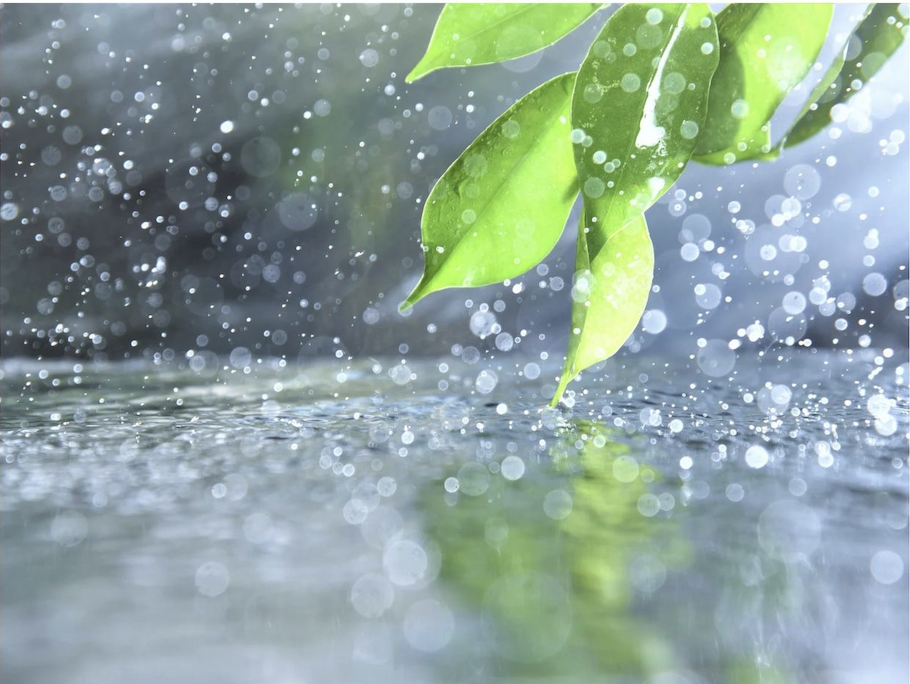
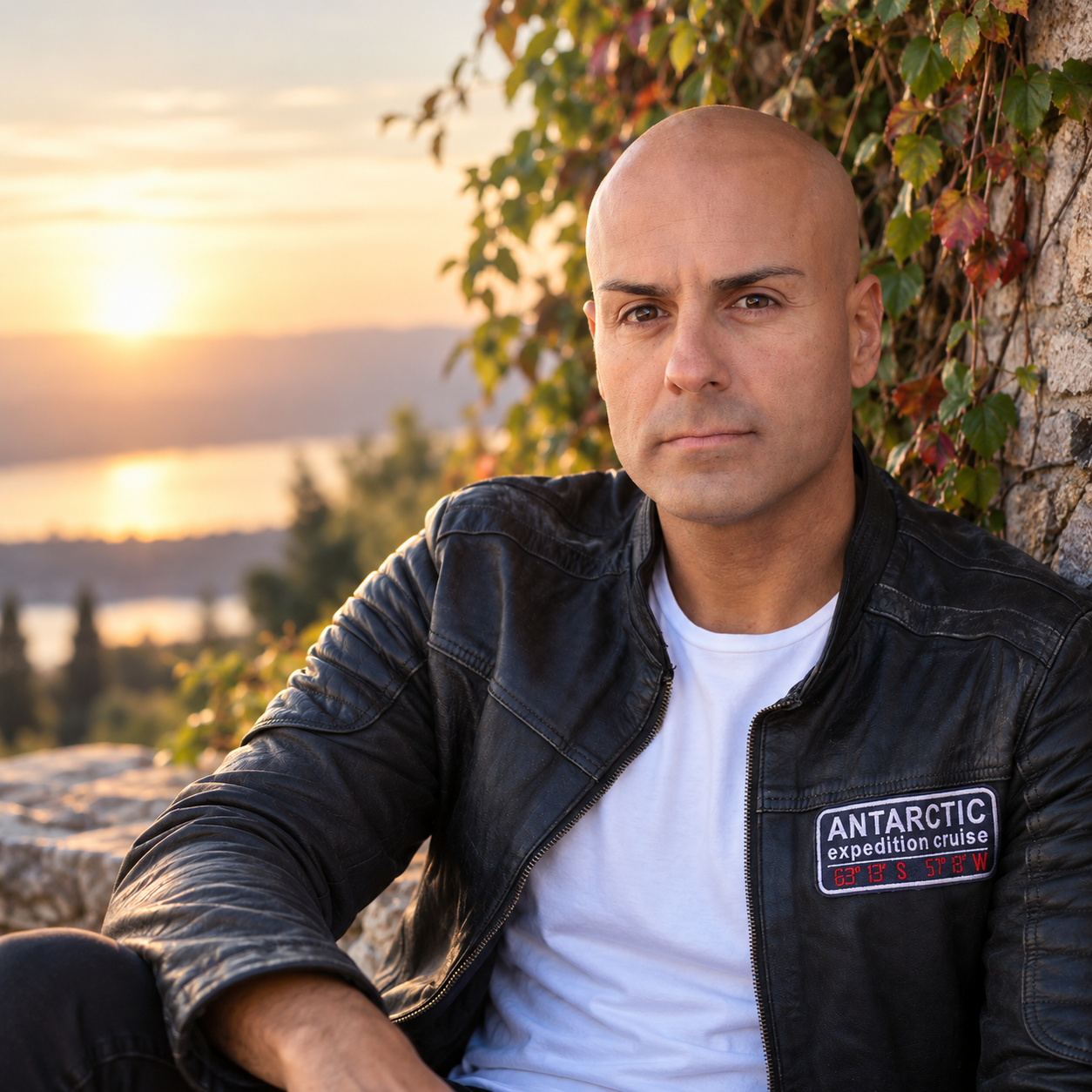
As I sit here under the rain, I find myself watching it. Not trying to understand it. Just watching… The way each drop falls. The sound as it hits the ground. The thunder rolling somewhere in the distance. The tree’s moving with the wind.
I ponder how the rain never questions itself. It doesn’t wonder if it should be falling here or somewhere else. It doesn’t resist the storm. It doesn’t try to control the wind. It simply moves. It follows something I don’t need to understand in order to experience.
And somehow, watching it brings me back to a place I’ve known for as long as I can remember. As a child, I was always in the clouds—or so my mother used to say. “Are you here?” she would ask.
I understand it differently now. I wasn’t absent. I was somewhere else. I was within contemplation. There is something about that space that has always felt natural to me. Peaceful, but never empty. Quiet, yet filled with possibility. It’s where curiosity and stillness seem to coexist.
And maybe that is what I’m feeling now as I watch the rain. The world keeps moving, yet I don’t need to move with it. I can simply sit here and observe. There is so much happening in these moments, yet so few people seem to give themselves permission to actually be within them. Maybe that’s what I’ve always been drawn to—not having all the answers, yet being willing to sit with the unknown.
Because the more tightly we hold onto an answer, the more attached we become, making it our “reality”. And attachment leaves very little room for something else to reveal itself.
To observe without immediately judging. To experience without needing to define. To be present enough to notice what is already happening.
NO ANSWER→LOG: SUSPENDED INQUIRY
MAYBE NOTHING IS WRONG→LOG: FEELING AND REACTION
-
43.48° N, 79.77° W
The Ranch:
The Inquiry: What happens when we stop needing to understand everything we feel?
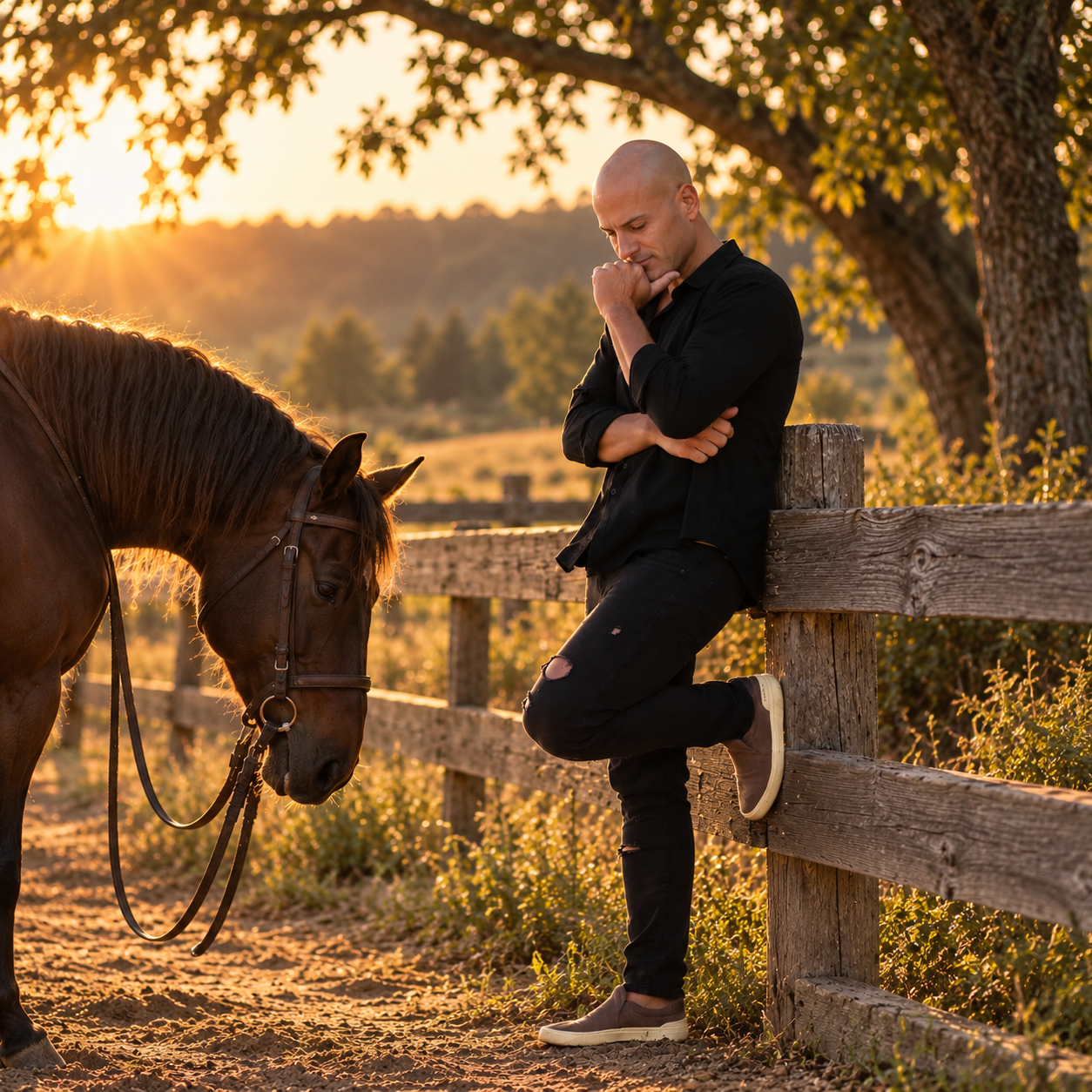
It's Tuesday morning and I've just finished a horseback riding class.My nervous system has felt slightly agitated since last night. Nothing dramatic. Just something I've been aware of.
Being on the horse this morning, moving, breathing, feeling what was happening in my body, I began observing it.
The agitation was there.
The energy was there.
And so was the mind, wanting to get involved.
To react. To reason. To create a "reality" around what the body was experiencing.
I've noticed how quickly the mind wants to make something out of a feeling.
To understand it.
To explain it.
To give it meaning.
Yet what if nothing needs to be understood?
I breathe. I move. I train. I get outside.
And sometimes I do nothing but observe.
There is something interesting about experiencing a feeling without needing to become it.
The feeling is there.
Yet there is also the awareness of the feeling.
This is where consciousness becomes interesting to me.
There is the experience, and there is the ability to witness the experience.
Who is feeling?
Who is observing?
And what exists in the "space" between the two?
I experience that space when I train. Through movement, breath, body, flow.
I experience it in nature. Walking, horses, mountains, water.
Nothing asking to be understood or explained.
It just is.
Yet we spend so much of our lives trying to make "sense" of what we experience.
We reason with it.
We give it meaning.
We decide what it is and why it's happening.
And somewhere in that process, we begin experiencing what we "think" is happening rather than what is actually happening.
I've become more aware of that distinction.
There is a space between feeling and reaction.
Between breathing in and breathing out.
Between movement and stillness.
Between what is happening and what we "think" is happening.
I've learned not to rush through that space, yet to embrace it.
Sometimes the agitation moves.
Sometimes something becomes clear.
Sometimes nothing happens at all.
And I'm becoming more comfortable with nothing needing to happen.
The mind wants an explanation. Something it can recognize, reason with, hold onto.
Yet I contemplate whether there are experiences beyond what the mind can explain.
Experiences that don't need to become anything.
They simply are.
I don't believe being grounded means never becoming unsettled.
For me, it's being able to witness what's happening without losing myself in it.
To feel something without immediately creating an emotion around the feeling.
Without deciding what it means.
Without needing to make it part of who I am.
That morning on the horse, the agitation didn't need to disappear for me to experience the moment.
I could feel it and still be there.
Moving.
Breathing.
Aware.
Maybe not every experience needs an answer.
Not every feeling needs a reason.
Not every "thing" needs to become something.
Maybe nothing is wrong.
Maybe something is simply moving through.
And maybe consciousness is being present enough to witness it without needing to change it.
The Inquiry remains:
What becomes available when we stop making something out of everything we feel?
Maybe the experience was never asking to be understood.
Maybe it was simply asking to be experienced. text goes here
THE ART OF BEING HERE →LOG: UNEXPECTED CONVERSATION
-
43.6806° N, 79.3911° W
Summerhill, Toronto
The Inquiry: What does it actually mean to be present?
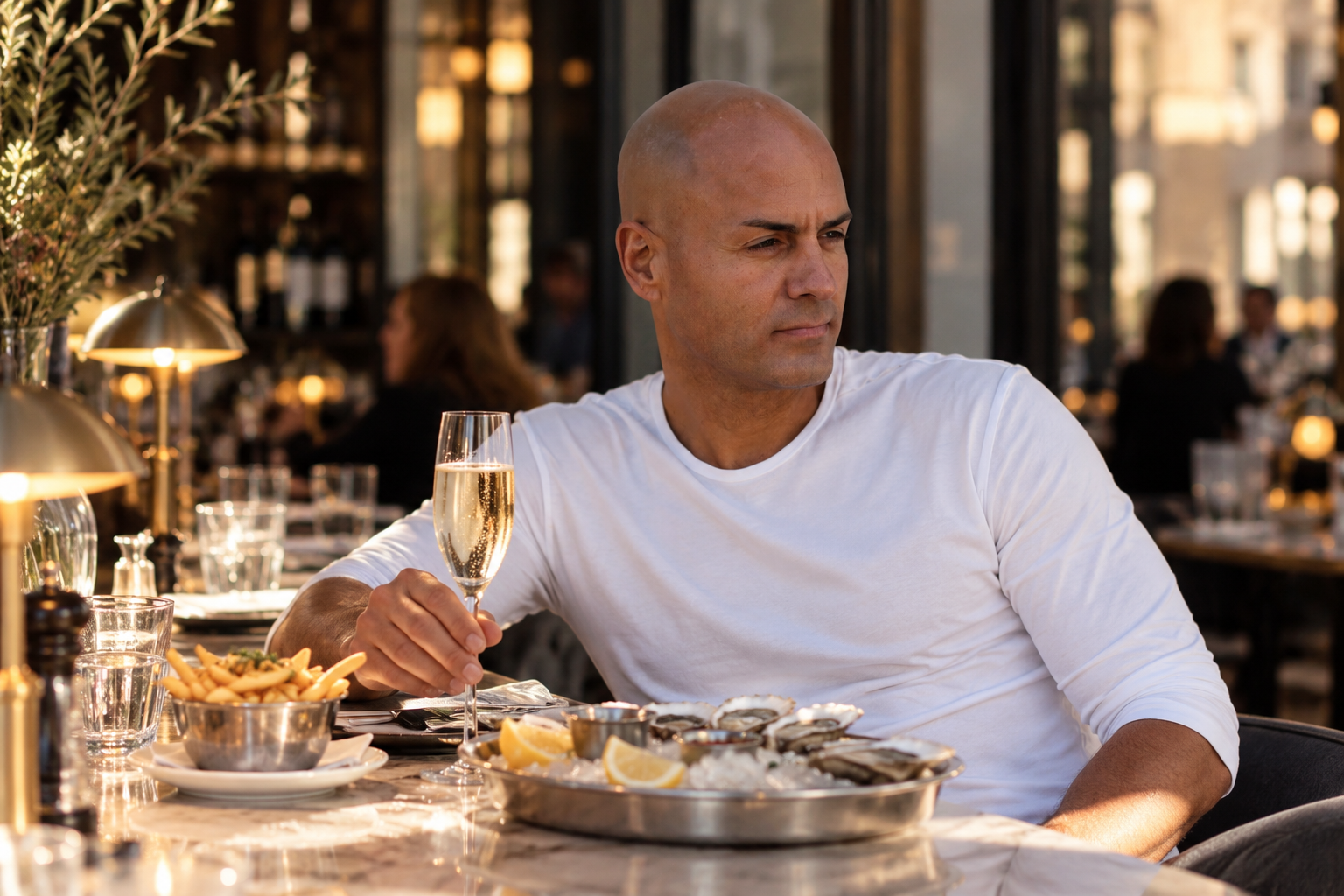
An old friend called me up and suggested we meet for our usual prosecco and oysters and talk a little business. We met in Summerhill, sat at the bar in Quanta Basta, ordered the prosecco, oysters and frites, and started talking.
We've always had some of our best conversations that way — a good bottle, tasty snack, no real agenda.
The prosecco was cold. The frites were crisp and the oysters fresh. A little lemon, a little salt, the taste of the sea. You take a sip. You taste the food. You notice the conversation. And for a moment, you're not thinking about what comes next.
You're actually there.
It got me thinking about how often we're physically somewhere but mentally somewhere else. Someone is sitting across from you, but their mind is already in the next meeting. They're having dinner, yet thinking about tomorrow. They're listening to you, yet already preparing their response.
They're there. Yet they're not there.
I've done it myself. And the more I pay attention to it, the more I realize what we lose when we're not present. We don't just miss the moment. We miss the experience of being alive inside it.
Because when you're actually present, something changes. You taste more. You hear more. You notice more. You feel more.
A conversation becomes richer. Food becomes an experience. Ordinary moments become something you actually remember. At least that's what I've noticed. Presence doesn't slow life down. It lets you experience more of it.
That afternoon, our conversation moved from clients to life. Where we've been. Where we're going. What we've learned. And I found myself wondering: Imagine everyone living every moment with that level of presence.
How much more would we experience?
How much more would we notice?
How much more alive would we actually feel?
Maybe that's what we're missing. Not more time. More of the time we already have.
Because there will always be another meeting. Another destination. Another thing waiting for our attention. But this moment doesn't repeat itself.
So maybe being present isn't about slowing down. Maybe it's about showing up for your own life while it's happening. Because you can spend your entire life preparing for the next moment—and completely miss the one you're in.
The Inquiry remains: What would your life feel like if you were completely here for all of it?
As I always say, this moment is all there is—and being present is how you experience it.
BEYOND THOUGHT→ LOG: THE MAGIC OF NOTHINGNESS
-
FIELD NOTES / 006
43.48° N, 79.77° W (approx.)
The Ranch:
The Inquiry: What becomes available when we allow nothing to be?
As you've probably heard me say before, I speak a lot about "the space" and "the medium."
These two come up often in my writing, in everyday conversations, and quite often someone will stop me and ask, "What does that mean?"
So I thought I'd take this opportunity to get into what I express.
There's something rather interesting about using words to explain. I've come to experience beyond them.
The Space
When I speak about "the space," I'm speaking about nothingness.
Not emptiness in the way we usually understand it. Not something missing or something we need to fill.
It's something that's always existed. It's always there.
Yet we've become so accustomed to filling every moment with thoughts, explanations, conversations, and meaning that the experience of nothingness can become uncomfortable. Not only uncomfortable, yet now hard to view.
I find that interesting.
Why does “nothing happening” make us feel as though something should be happening?
I've come to experience “nothingness” as something quite beautiful.
There's no need to do anything with it. No need to give it meaning or make it become something.
It's allowing what “is”, to be.
And perhaps what's most interesting is what becomes available when we stop trying to fill that space.
The Medium
When I speak about "the medium," I'm referring to the space in which an experience becomes available.
Consider a conversation.
I'm sitting across from someone. We're speaking, exchanging thoughts, ideas, experiences.
And then there's a moment when neither of us says anything.
Silence.
For some, that silence can feel uncomfortable. The mind immediately wants to fill it. Someone feels the need to speak, to keep the conversation moving.
Yet I've noticed something interesting when I allow that silence to exist.
There's still an experience happening.
There's awareness. There's feeling. There's something beyond the exchange of words.
And sometimes, from that nothingness, something entirely unexpected comes through.
A thought. A feeling. A different direction in the conversation.
Something neither of us was necessarily looking for.
For me, this is where the medium becomes interesting.
Not something I need to control or reason with, but something I allow myself to experience.
Allowing What Is
I don't necessarily experience the space and the medium as separate.
The space has always existed. The medium becomes available when I allow myself to experience what's there without needing to interfere. Neither left brain, or right brain.
And I find this extends far beyond conversation.
We spend so much of our lives trying to fill the spaces.
With answers.
With explanations.
With something to do, something to think about, something to become.
As though nothingness is something to escape.
Yet what if nothingness is where something extraordinary becomes available?
I've experienced moments when I wasn't searching for anything, when I wasn't trying to understand anything, and something came through that I could never have reasoned my way into.
Not because I made it happen.
Because I allowed it.
I don't share this expecting anyone to understand or agree with my experience.
It's simply something I've become aware of through living.
And perhaps the next time you're sitting across from someone and the conversation falls silent, notice what happens.
The urge to speak. To fill the silence. To make something happen.
Yet what if you didn't?
What if you allowed the “nothingness” to exist without interfering?
I've come to appreciate that the most interesting part of a conversation isn't always what's being said.
Many times, it's what comes through when no one is speaking at all.
The Inquiry remains:
If nothingness has always existed, what is it that we're so afraid of finding there?
MISUNDERSTOOD→LOG: RELEASE OF VALIDATION
-
The Inquiry: What happens when you stop trying to be understood?
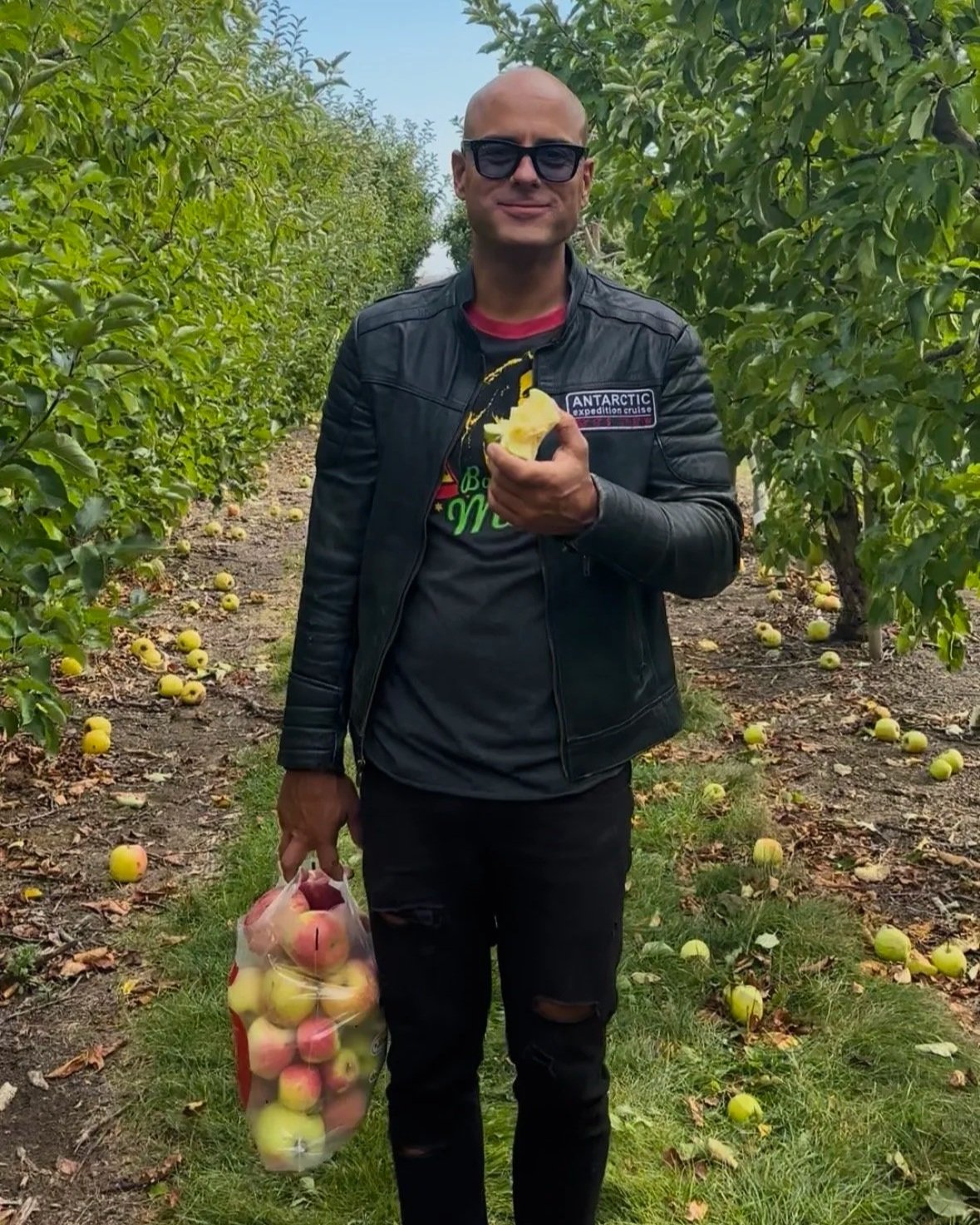
It’s September in Ontario, and one of my favourite things about this time of year is getting out of the city and heading toward the outskirts for apple-picking season. I was on my motorcycle, winding through the countryside, surrounded by trees beginning to turn, open fields, and that unmistakable feeling that summer is giving way to something else.
I stopped at an orchard and reached for one of my favourites—the crisp ones. There’s something about biting into a fresh apple straight from the tree. Simple. Sharp. Alive.
There’s something about riding that creates space to ponder. The road in front of you. The air. The movement. No meetings. No notifications. No one else’s opinion in the room. Just you, moving with the wind. And somewhere between the road and the trees, a thought entered my mind: what if we all stopped trying to be understood before we can actually be free?
I started reflecting on how much of our lives can be spent trying to manage how other people see us. I've done it myself. There was a point in my life when I chose self-acceptance over external validation, and that decision changed everything.
Validation can become a quiet form of dependence. You start measuring yourself through other people's reactions—whether they approve, understand, agree, or see you the way you see yourself. And when they don't, you start adjusting. You explain more. You soften your edges. You alter your truth. You become more digestible. And somewhere along the way, you can lose sight of who you were before you started asking everyone else who you were supposed to be.
I've learned that being misunderstood isn't necessarily a problem to solve. Sometimes it's simply the price of refusing to abandon yourself. Because the moment you need someone else to understand you, their perception begins to have authority over your identity. And that's a dangerous place to live.
You can't control how someone interprets you. You can't control what they project onto you. And you certainly can't build an authentic life while constantly managing someone else's perception of it. At some point, you have to detach. Not from people—from the need to be understood by them.
This changes the architecture of your life. Your energy becomes your own again. Your decisions become clearer. Your relationships become more honest. Some people will stay. Some won't. And sometimes that comes with grief. You may have to let go of relationships you thought would evolve with you. You may have to accept that someone can know you for years and still never truly understand you. That's not failure. That's acceptance.
You don't lose yourself because someone misunderstands you. You lose yourself when you start changing who you are so they won't.
For me, freedom started when I stopped treating other people's perception of me as my responsibility. Getting your power back isn't about convincing people you're right. It's about no longer needing them to agree. It's trusting what you know. Living what you believe. And allowing your life to speak for itself. Because you don't need a jury to validate your truth. You need the courage to live it.
Maybe freedom isn't being understood. Maybe freedom is no longer needing to be other than yourself.